Uncategorized

User Generated Content Conversion Loops
Uncategorized

User Generated Content Conversion Loops

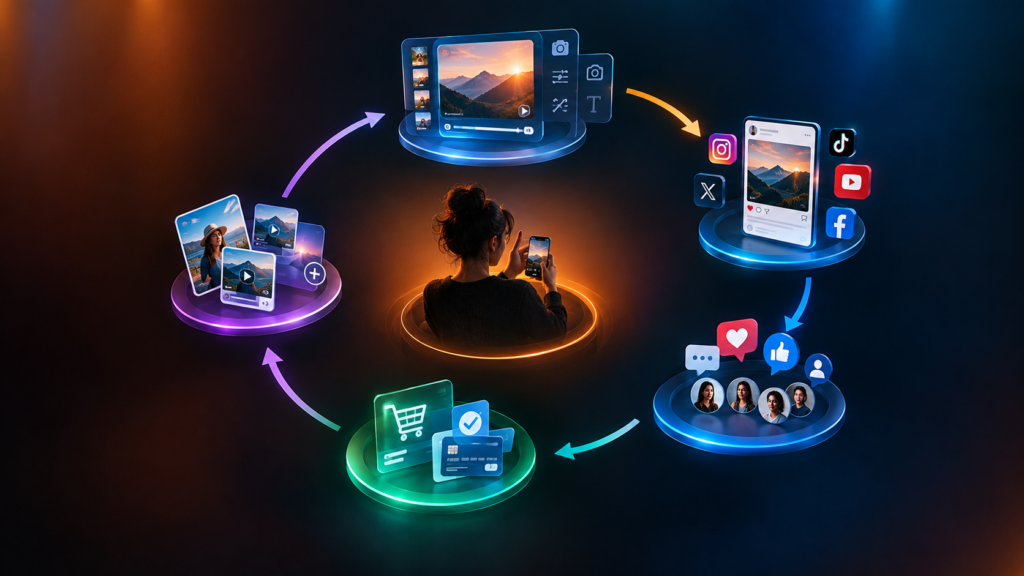
User Generated Content Conversion Loops are the self-sustaining growth engines driving the modern digital economy. Unlike traditional linear marketing funnels, which rely on continuously pouring money into paid ads to drive one-off purchases, a User Generated Content Conversion Loops conversion loop builds a compounding growth cycle. In this framework, every user action naturally generates content that builds social proof, attracts new prospects, and converts them into the next wave of content creators. The Mechanism Behind the Loop The fundamental loop operates on a continuous four-stage ecosystem: The Activation Trigger A customer reaches a moment of value or delight—such as unboxing a premium product, hitting a milestone in a software application, or achieving a personal goal. The brand provides a seamless prompt or incentive that encourages them to document this moment. Organic Content Generation The user creates content in the form of video reviews, social media posts, unboxing clips, interactive templates, or forum discussions. This content is powered by intrinsic motivators like status, belonging, creative expression, or tangible rewards. Algorithmic and Social Distribution The user shares this content across their personal networks or search platforms. Because it originates from a peer rather than a corporate marketing team, it carries significantly higher trust, bypassing consumer ad fatigue and social media ad blindness. Conversion and Onboarding Prospects encounter this authentic social proof at high-intent decision moments, leading to lower customer acquisition costs and higher conversion rates. Once these prospects become customers, they are immediately onboarded into the same system, restarting the loop. Why User Generated Content Conversion Loops Outperform Traditional Marketing Traditional acquisition channels face escalating Customer Acquisition Costs (CAC) because every click must be bought. In contrast, UGC loops leverage compounding returns. As your customer base grows, the volume of indexed, searchable, and shareable assets grows exponentially, creating a moat of organic discoverability.Furthermore, user-generated assets massively boost Search Engine Optimization (SEO). Thousands of micro-reviews, unboxing discussions, and community posts create thousands of long-tail keywords that search engines index continuously, driving steady intent-driven traffic without requiring internal content creation teams. Critical Engineering Strategies for Implementation Incentive Architecture To sustain a high-volume loop, brands must balance intrinsic rewards (public recognition, exclusive community badges, or creator status) with extrinsic incentives (discounts, affiliate revenue, or access to premium features). Over-indexing on money often leads to transactional, low-quality content, while failing to offer recognition lowers participation. Frictionless Product Integration The most effective loops embed content creation directly into the user experience. Examples like shareable annual recaps, one-click template sharing, or automatic referral links transform regular product usage into public marketing collateral effortlessly. The Psychological Lock-In Content creators exhibit significantly higher customer retention rates than passive users. When customers invest time and creative energy into producing content around a brand, they experience the psychological phenomenon known as the IKEA effect, deeply increasing their brand loyalty. Read the full analysis at GrowthMethod
Uncategorized

Headless CMS & Jamstack Architecture: The Future of Modern Web Development

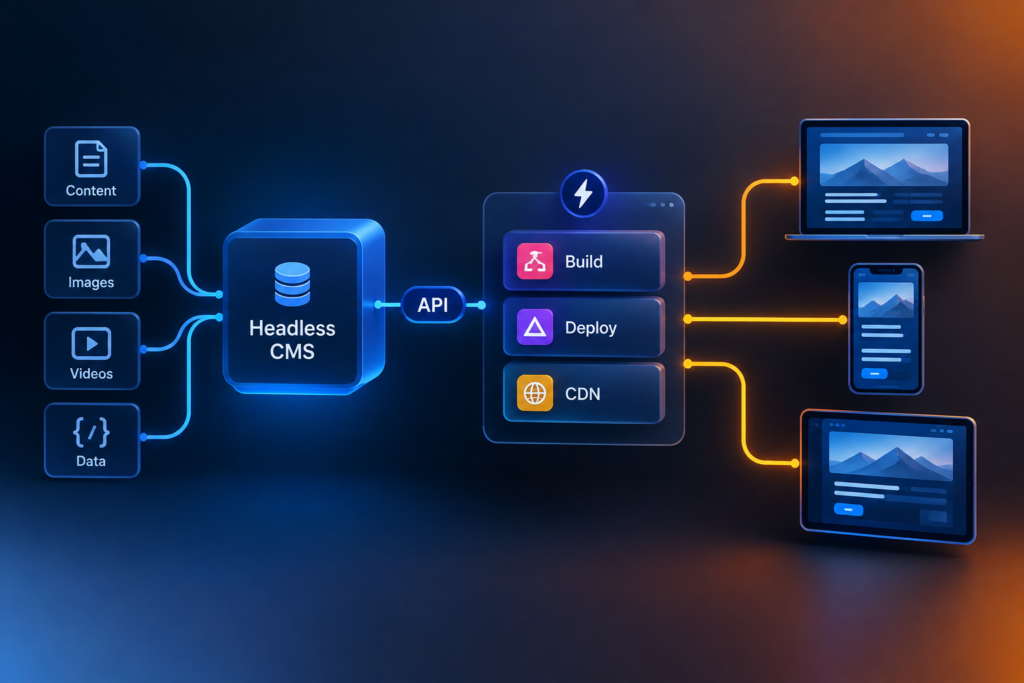
Headless CMS & Jamstack Architecture In today’s digital landscape, speed, security, and scalability define the success of any website or application. Traditional monolithic CMS platforms like legacy WordPress or Joomla are increasingly falling behind the demands of modern digital experiences.The two paradigm-shifting strategies that are transforming web development are Headless CMS and Jamstack Architecture. What is a Headless CMS? In a traditional CMS, the front end (the “head” or presentation layer) and the back end (content management and database) are tightly bound together. A Headless CMS severs this connection by removing the front-end rendering layer entirely. What is Jamstack Architecture? Jamstack stands for JavaScript, APIs, and Markup. Rather than generating pages on a server at the exact moment a user requests them, Jamstack pre-renders static HTML pages at build time and serves them directly over a Content Delivery Network (CDN). Key Benefits of Combining Headless CMS & Jamstack Architecture When paired, Headless CMS and Jamstack deliver an unmatched modern web stack: Key Differences Between Traditional CMS and Headless CMS + Jamstack Traditional platforms like WordPress rely on a monolithic architecture where the front-end presentation and back-end database are tightly coupled. In contrast, the Headless CMS & Jamstack Architecture approach is completely decoupled, keeping content management separate from the display layer.When it comes to performance, traditional systems often suffer from slowness due to complex database queries, server-side processing, and heavy plugins. Jamstack eliminates these bottlenecks by serving pre-rendered static content instantly via global CDNs. From a security perspective, legacy platforms are frequently vulnerable to attacks targeting database endpoints, outdated themes, or insecure plugins. Headless Jamstack architecture drastically reduces these security risks because there is no direct database or server exposed to the front end.Finally, while traditional CMS solutions limit content distribution primarily to standard websites, a Headless CMS allows seamless multi-platform delivery—pushing content concurrently to websites, mobile apps, kiosks, and smart devices through a single backend. Read the full analysis at jamstack.org or CONTACT

Uncategorized

Dark Social & Zero-Click Content

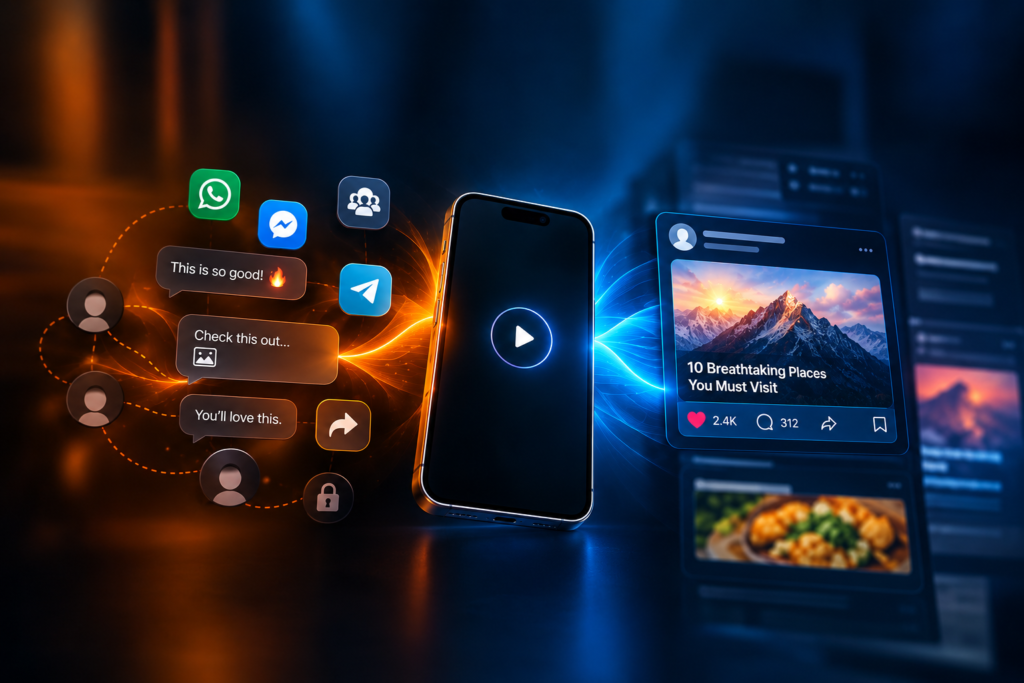
Dark Social & Zero-Click Content: The Silent Shift Reshaping Modern Digital Marketing The content strategy and digital marketing playbook has changed significantly. For many years, the approach was simple: produce content, share it on social media with a link, increase website traffic, and convert those visitors. Today, that model is breaking down. Platforms want to keep users on their apps, and users prefer sharing content privately. Understanding Dark Social & Zero-Click Content is no longer optional—it is essential for survival in modern digital marketing. What is Dark Social? Dark Social refers to the website traffic and content shares that happen through private channels, making them impossible for standard analytics tools (like Google Analytics) to track accurately.When someone copies a link and sends it directly to a friend or colleague, referral data gets lost. Instead of showing up as social media traffic, it gets misattributed as “Direct Traffic.” Primary Dark Social Channels: Why Dark Social Matters A massive portion of actual buying decisions and product recommendations happen in these private spaces. If you rely solely on traditional attribution models, you are missing the most influential conversations surrounding your brand. What is Zero-Click Content? Zero-Click Content is content optimized to deliver full value directly within the platform native feed—without requiring the user to click an external link to get the answer.Search engines and social media algorithms (Google, LinkedIn, X, TikTok, YouTube) actively prioritize content that keeps users on their platform. Posts with external links often suffer from reduced organic reach. Examples of Zero-Click Formats: How to Adapt Your Content Strategy Read the full analysis at SparkToro Blog or CONTACT

Scroll to Top